Tetris Games

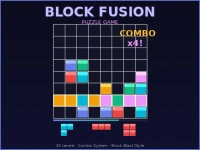





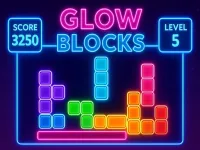
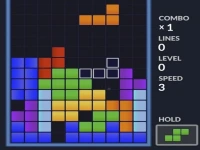
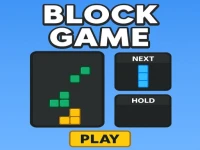




Find a block challenge that fits your pace The Tetris collection groups games associated with arranging shapes, managing gaps and making useful space. In the familiar falling-piece format, a tetromino descends while you move and rotate it toward a landing. Completed horizontal lines disappear. The challenge is keeping the settled stack usable for future pieces, especially when an awkward placement can bury an empty square below a ledge. Try Classic Tetris for a concrete falling-block example. Its game logic uses a ten-column, twenty-row field and…Learn moreLatest update
Find a block challenge that fits your pace
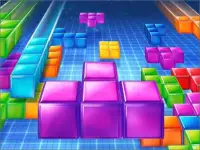
The Tetris collection groups games associated with arranging shapes, managing gaps and making useful space. In the familiar falling-piece format, a tetromino descends while you move and rotate it toward a landing. Completed horizontal lines disappear. The challenge is keeping the settled stack usable for future pieces, especially when an awkward placement can bury an empty square below a ledge.
Try Classic Tetris for a concrete falling-block example. Its game logic uses a ten-column, twenty-row field and four-square shapes. It provides directional movement, rotation and faster downward movement. The keyboard uses Space for rotation, and on-screen buttons offer dedicated actions. Check the controls at the beginning rather than transferring an assumed key mapping from another version.
Learn to read the surface you are building
Look at the outline of the settled blocks before committing the next piece. A fairly low surface with manageable steps gives several shapes a useful place to land. A tall isolated column narrows the field, while a covered empty square creates a problem that often needs later line clears to expose. Evaluate the spaces underneath the piece as carefully as its visible top edge.
Not every uneven area is a mistake. A small step can accept a bent shape neatly, and an open vertical well can remain usable if a suitable piece can still reach it from above. The important distinction is access. Once a block covers a gap, the space is no longer equivalent to an open well. Avoid treating a buried hole as something an ordinary later drop can simply fill.
Use the next piece without depending on a perfect sequence
Classic Tetris displays an upcoming piece, which helps you compare otherwise similar placements. Ask whether the surface left by the current piece also gives the preview a sensible landing. This short look ahead is useful without requiring a complete prediction of the run. It encourages flexibility rather than a high stack that survives only if one exact shape arrives next.
Clear ordinary rows when they restore space. A larger clear can be satisfying, but reserving a deep well becomes risky if the intervening pieces have nowhere safe to go. Beginners usually gain more from controlling height and avoiding holes than from committing every run to one scoring pattern. Keep alternatives available so that an inconvenient shape does not immediately become a crisis.
Check how each game handles shapes
Block games can differ in timing and available actions. A gravity-driven game asks you to prepare before a piece settles. A placement puzzle may instead allow patient comparison among available shapes. Some variants change the board or the clearing condition. Read the chosen title's instructions before assuming that rotation, a preview, a hold action or a particular scoring system is available.
That distinction also changes how you practice. In a timed falling-piece game, it helps to recognize a safe orientation quickly and release a movement button at the intended column. In a deliberate placement game, comparing several possible footprints may matter more. Both benefit from preserving useful empty space, but the action you take and the time available to take it are different.
Turn a short run into useful practice
Choose one habit for a session. You might aim to avoid buried gaps, rotate before the piece reaches the stack, or consult the preview on every drop. After losing, identify the first restrictive placement rather than blaming only the final shape. A tower created much earlier may have removed the landing options the last piece needed. Finding that point gives the next attempt a specific purpose.
For a fuller explanation, read the falling-block board management guide. It compares open wells with holes and explains how to recover space without relying on an unverified special feature. Use the collection to choose a game, then judge your progress by the surfaces and options you leave behind as well as by the score.