
Bus School Park Driver
 kizi.com.es
Sign in to keep recently played games, favorites and your player profile available on this site.
Popular Games
Last Played
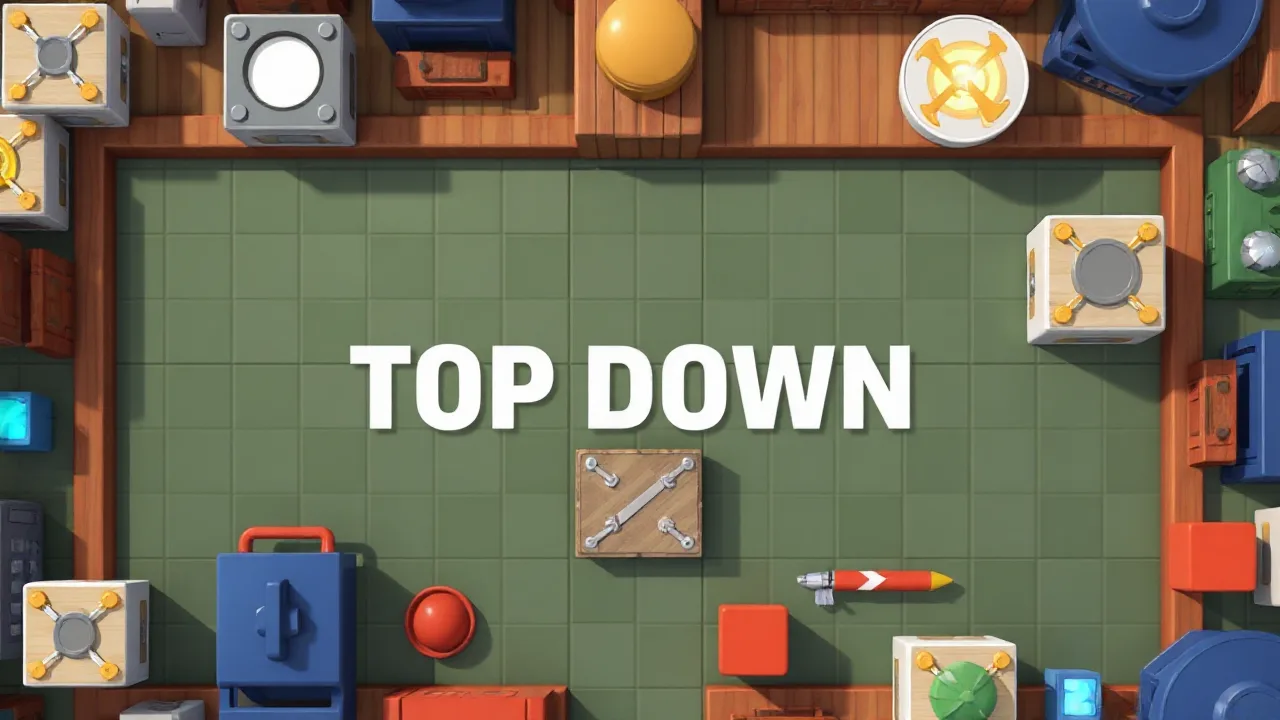
Welcome to the world of Top Down, a captivating puzzle game that challenges your spatial reasoning and strategic thinking from a unique overhead perspective. This page is dedicated to exploring the mechanics, strategies, and overall experience of this engaging brain-teaser, designed to help you understand why it’s a standout title in the puzzle genre and how you can master its challenges.
Top Down takes the classic puzzle formula and elevates it by presenting every challenge from a bird's-eye view. This perspective isn't just a visual choice; it's fundamental to the gameplay. You see the entire board, the path of moving elements, and the layout of obstacles all at once. This allows for comprehensive planning but can also create a delightful sense of complexity as you try to untangle multiple interacting systems. The game is built on the principle of observation and foresight, rewarding players who can look at the whole picture and deduce the correct sequence of moves to reach their objective.
Playing from a top-down angle fundamentally changes how you interact with a puzzle. Unlike first-person or side-scrolling games, you lack a limited field of view. Every piece of information is available from the start. The challenge, therefore, shifts from discovery to synthesis. You must process how all the visible components relate to one another. A block you need might be behind a series of levers, and the path to activate those levers might be blocked by the very block you're trying to reach. This creates intricate, interdependent puzzles where the solution often involves working backward from the goal to plan your first move.
Success in Top Down is less about quick reflexes and more about deliberate thought. The game is an excellent workout for your spatial reasoning skills. You'll constantly be rotating objects in your mind, predicting the trajectory of moving parts, and visualizing the state of the puzzle several steps ahead. It encourages a methodical approach: survey the entire board, identify the primary obstacle, trace the chain of events needed to remove it, and then execute your plan one step at a time. This focus on forward planning makes each solved puzzle feel like a genuine intellectual victory.
Despite the potential complexity of its puzzles, Top Down is praised for its intuitive control scheme. The game is designed to be easily accessible, often using simple click-and-drag or point-and-click mechanics to manipulate objects. You might slide blocks along a grid, rotate platforms, or activate switches with a single action. This simplicity ensures that the challenge always comes from the puzzle's logic, not from fighting with complicated controls. The clean interface keeps the focus squarely on the mental task at hand, allowing players of all ages and skill levels to jump in and start solving.
In a gaming landscape often filled with high-intensity action, Top Down offers a refreshing alternative. The pace is entirely in your hands. There are typically no time limits or external pressures, creating a calm and contemplative environment. This makes it an ideal game for unwinding after a long day or for stimulating your brain during a quiet moment. The satisfaction comes from that "aha!" moment when a complex solution clicks into place, providing a deeply rewarding sense of accomplishment that is both relaxing and mentally engaging.
The effectiveness of a top-down puzzle game relies heavily on its visual clarity. Top Down excels in this area with a clean, minimalist art style that prioritizes function over flashy effects. Different interactive elements are color-coded or distinctly shaped, making them instantly recognizable. The game's interface is unobtrusive, presenting only the necessary information and controls. This thoughtful design ensures that you are never confused about what you can interact with, allowing you to devote all your mental energy to solving the puzzle itself.
One of the strongest aspects of Top Down is its approachable difficulty curve. The game typically begins with simpler puzzles that introduce core mechanics one by one. As you progress, new elements are added and combined in increasingly ingenious ways. This gradual escalation ensures that you are always learning and never feel overwhelmed. The structure allows for a steady sense of progression, where each solved puzzle builds your confidence and toolkit for the next, more complex challenge ahead.
| Feature | Details |
|---|---|
| Gameplay Style | Logic-based puzzle solving from a bird's-eye perspective |
| Primary Skill | Spatial reasoning and strategic planning |
| Session Pace | Relaxed and contemplative; player-driven speed |
| Control Scheme | Simple point-and-click or drag-and-drop mechanics |
| Device Fit | Ideal for play on desktops, tablets, and mobile devices |
| Category Match | A perfect fit for fans of thoughtful puzzle and brain-teaser games |
Is this game suitable for all ages?
Yes, Top Down is designed to be family-friendly. Its puzzles rely on logic and observation rather than violence or complex themes, making it appropriate for a wide range of players.
Do I need any special equipment to play?
No. The game is built to run smoothly in modern web browsers on a variety of devices, including computers, tablets, and smartphones. All you need is a device with an internet connection.
How long does a typical puzzle take to solve?
This varies greatly depending on the puzzle's complexity and your experience. Some simpler puzzles can be solved in a minute or two, while more intricate later-level challenges might take much longer as you plan your approach.
Is there a story or narrative to follow?
The game focuses primarily on the puzzle-solving experience itself. While there may be thematic elements or a light narrative framework, the core engagement comes from overcoming the intellectual challenges presented by each level.
Can I get stuck on a puzzle?
If you find yourself stuck, the best approach is often to take a short break and return with fresh eyes. Since you can see the entire board, stepping away can help you spot a connection or solution you previously overlooked. There is no penalty for taking your time.


