
Bus School Park Driver
Popular Games
Last Played
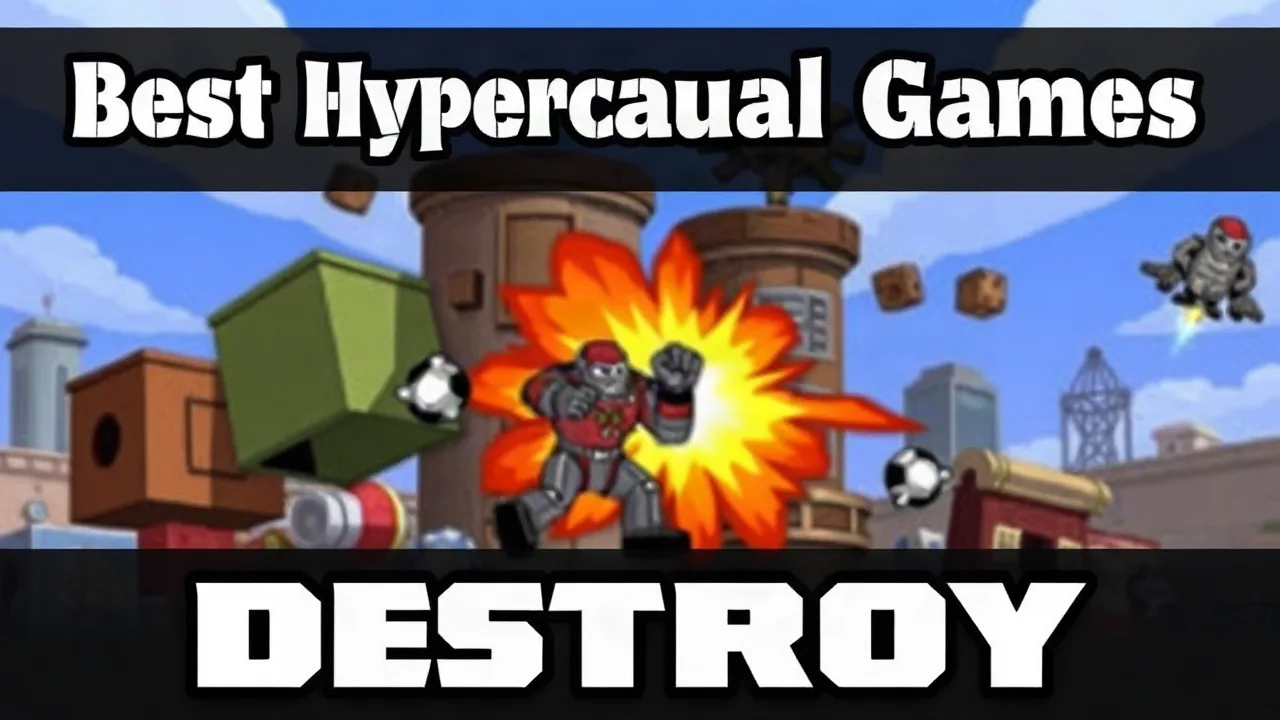
Destroy is a fast-paced hypercasual game where demolition is the whole point. This page breaks down what the game offers, how it fits into the hypercasual genre, and why it earns a spot in your quick-play rotation.
Hypercasual games live and die by how quickly they hand you fun. Destroy does exactly that. You jump in, start smashing, and the feedback loop keeps you going round after round. There is no long tutorial, no steep learning curve, and no setup to wade through before the action starts.
The appeal comes down to simplicity. The core loop is built around tearing things down, and every session is short enough to fit into a coffee break or a commute. That makes it a natural fit for anyone browsing a game catalog looking for something they can pick up and enjoy within seconds.
The structure of Destroy follows the classic hypercasual pattern: immediate input, visible consequence, repeat. You act, the environment reacts, and you move on to the next target. There is a satisfying rhythm to the way structures respond to your input, and that responsiveness is what keeps sessions feeling crisp rather than sluggish.
Progress tends to be measured in rounds or attempts rather than long campaigns. Each run gives you a clean slate, which means you can jump back in without remembering where you left off. That low-friction restart design is a hallmark of well-made hypercasual titles.
Controls in Destroy are intentionally minimal. The game is designed around simple taps or clicks, so you never need to memorize a button layout or juggle multiple inputs at once. This keeps the barrier to entry near zero and lets you focus entirely on timing and placement.
Because the control scheme is so lean, the game translates well across devices. Whether you are on a phone during a short break or on a desktop between tasks, the input model stays consistent. That consistency matters more than it sounds when you are trying to squeeze in a quick session.
Runs in Destroy are quick by design. You are rarely locked into a single attempt for more than a minute or two, which makes restarting feel effortless rather than punishing. The short-cycle structure encourages a "one more try" mentality without demanding a large time investment.
Replay value comes from chasing better outcomes rather than unlocking new content. Each attempt gives you a chance to refine your approach, and that incremental improvement is enough to keep the loop engaging over multiple sessions.
Hypercasual games are defined by accessibility, short sessions, and immediate feedback. Destroy checks all three boxes. It does not ask you to learn a system before you can enjoy it, and it does not pad playtime with menus or setup screens.
The category thrives on games that respect your time, and Destroy does exactly that. You can open it, play a few rounds, and close it without feeling like you left something unfinished. That kind of clean exit is rare and worth appreciating.
This is the kind of game that shines during downtime. Waiting rooms, commutes, lunch breaks, or the gap between tasks all work well. The short session length means you are never overcommitting, and the simple controls mean you can play without full concentration if needed.
It also works well as a palate cleanser between longer, more demanding games. If you have just finished something intense, a few rounds of straightforward demolition is a nice way to reset before your next session.
Within the wider world of browser games, Destroy earns its place by nailing the fundamentals. It does not try to be more than it is. The scope stays tight, the feedback stays clear, and the fun arrives immediately. That discipline is what separates good hypercasual titles from forgettable ones.
Plenty of games in this space overcomplicate their core loop or bury it under unnecessary systems. Destroy avoids that trap entirely. What you see in the first few seconds is what you get for the rest of your session, and that honesty is refreshing.
| Feature | Details |
|---|---|
| Gameplay style | Hypercasual demolition-focused action |
| Controls | Simple tap or click input |
| Session pace | Short rounds with quick restarts |
| Device fit | Works well on mobile and desktop |
| Category match | Hypercasual Games |
| Learning curve | Near-zero, playable immediately |
Is Destroy free to play?
Yes. Destroy is available as a free online game you can jump into without any purchase or setup.
Do I need to download anything?
No. Like most browser-based games in the hypercasual category, Destroy runs directly in your browser with no installation required.
How long is a typical session?
Sessions are short by design. Most runs last a minute or two, which makes the game easy to fit into small pockets of free time.
Is it suitable for beginners?
Absolutely. The controls are minimal and there is no tutorial to sit through. You can start playing and understand the loop within seconds.
Does it work on mobile?
Yes. The simple input scheme translates cleanly to touch screens, so the experience holds up on phones and tablets as well as desktop.